[English below]
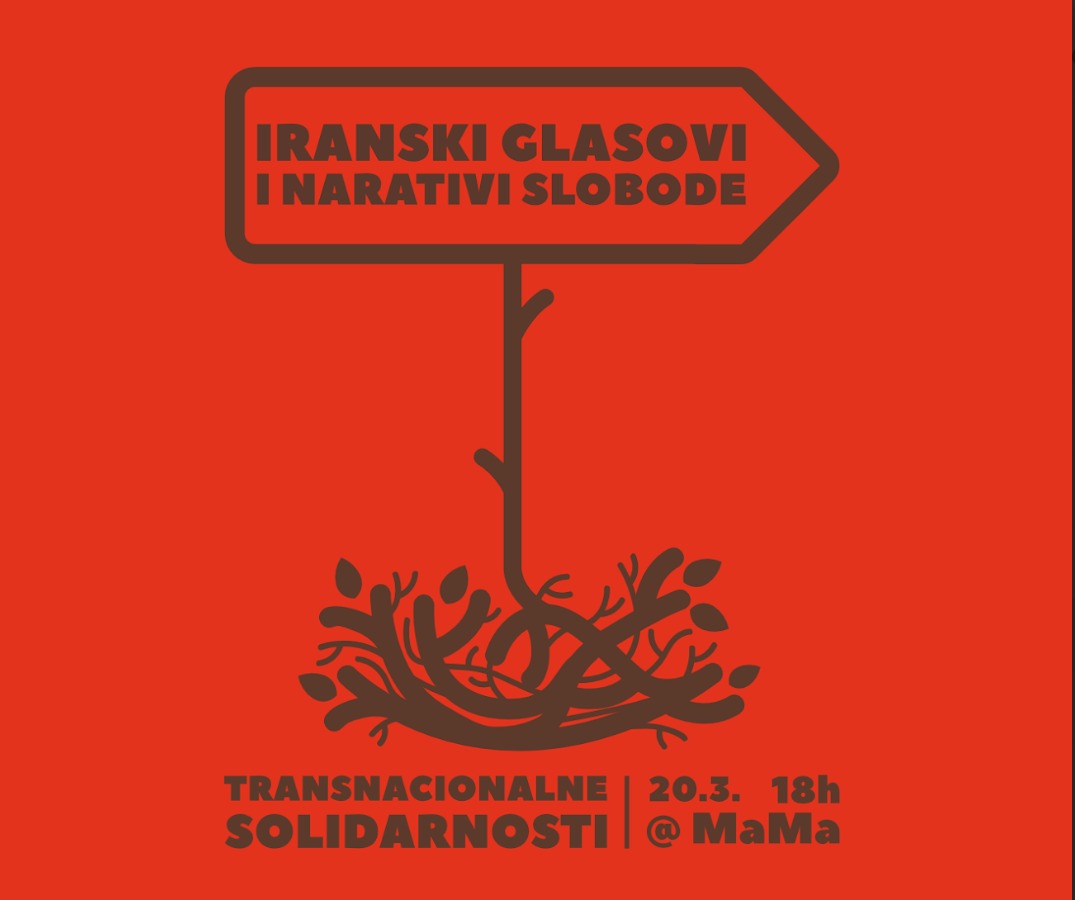
Pozivamo vas da nam se ponovno pridružite u krugu Transnacionalnih solidarnosti, okupljanju koje se, nažalost, događa usred tekućih napada na Iran i iranski narod. Vojna agresija na Iran započela je krajem veljače, pokrenuta od strane Izraela i Sjedinjenih Američkih Država i uokvirena poznatom gramatikom cinične „preventivne akcije“. Taj jezik snažno priziva sjećanje na invaziju Iraka, opravdavanu lažnim tvrdnjama, koja je za sobom ostavila nekoliko stotina tisuća mrtvih Iračana, raseljavanje ljudi diljem svijeta i razaranje čitave zemlje. U trenutku kada se škole i mladi životi nalaze na nišanu onoga što se predstavlja kao nužan čin oslobođenja, pozvani smo suočiti se s načinima na koje se imperijalno nasilje iznova odvija pod izlikom spašavanja ljudi od autoritarnih režima.
Više od stoljeća Iran oblikuju kolonijalna nadmetanja oko nafte, regionalne borbe za moć i trajne vanjske intervencije. Od britanskih i ruskih upliva u 19. stoljeću, preko svrgavanja demokratske vlade Irana 1950-ih i ponovne uspostave američki podržanog režima šaha Pahlavija, pa do katastrofalnih sankcija uvedenih nakon revolucije 1979. godine — sve te povijesti i danas odzvanjaju. Prostor zapadne Azije i dalje se prečesto tretira kao igralište kapitalističkih i neokolonijalnih manevara, umjesto kao dom u kojem suverenitet i pravo naroda na samoodređenje moraju biti poštovani.
Istodobno, teokratski autoritarizam koji se učvrstio nakon revolucije — proveden nasilnim gušenjem neslaganja, brutalnim obračunima sa ženskim pokretima za slobodu, ciljanjem kurdskih i baločkih zajednica te sustavnim kršenjem temeljnih sloboda — nanio je duboke rane iranskom društvu. Ove su okolnosti desetljećima poticale otpor, ali i valove prisilnih migracija koje su iranske glasove i borbe raznijele diljem svijeta.
Ovo okupljanje u središte stavlja glasove Iranki i Iranaca koji stoje na strani oslobođenja iranskog naroda — protiv strane intervencije, ali i protiv domaće represije — odbacujući rat kao oruđe imperijalnih ambicija jednako kao i klerikalne dominacije. Zajedno ćemo promišljati kako se imperijalna geopolitika, državna represija i globalne hijerarhije moći presijecaju i proizvode nasilje, raseljavanje i patnju.
Naš je cilj osporiti i delegitimirati svaki oblik vladavine koji narušava dostojanstvo i suverenitet ljudi, istovremeno gradeći solidarnosti utemeljene na antiimperijalnim, antikolonijalnim i antiautoritarnim opredjeljenjima. Vjerujemo da time otvaramo prostor i doprinosimo razgovorima koji njeguju pravdu, dostojanstvo i istinsko pravo na samoodređenje za sve koji Iran nazivaju domom.
U petak 20.3. razgovarat ćemo sa Shirin Mirzanejad i Mehrdadom Khamenehom.
Shirin Mirzanejad pravna je stručnjakinja, prevoditeljica, spisateljica i istraživačica kazališta. Trenutno djeluje kao voditeljica projekata u Exit Art Studiju u Hrvatskoj. Radila je kao glavna urednica publikacije Theatre Today i izvršna urednica u okviru Exit Theatre Group, te kao pomoćnica redatelja u petnaest kazališnih produkcija i dvanaest televizijskih drama i dokumentarnih filmova. Nastupila je i u televizijskoj drami The Girl with the Red Ribbon, koja komemorira masakr političkih zatvorenika u Iranu tijekom 1980-ih. Njezin rad povezuje pravnu znanost, kulturnu kritiku, ženska prava i kazališnu praksu, s posebnim fokusom na susretišta politike i izvedbe. Među njezinim radovima nalaze se dokumentarni scenariji o Emmi Goldman (Emma Goldman: Living My Life), Rosi Luxemburg i Vladimiru Iljiču Lenjinu; televizijska adaptacija drame The Teachers Mohsena Yalfanija; te prijevodi triju drama Howarda Zinna — Marx in Soho, Emma i Daughter of Venus — kao i djela Eve Ensler I’m an Emotional Creature i A Memory, a Monologue, a Rant, and a Prayer. Prevela je i eseje poput Theatre Against Dictatorship Marte Coco, Art and the Class Struggle i Ideas of Karl Marx Alana Woodsa te Performance and Value: The Work of Theatre in Karl Marx’s Critique of Political Economy Michaela Shanea Boylea. Autorica je i knjige Theatre within the Capitalist System: Seven Essays, među ostalim radovima.
Mehrdad Khameneh filmski je i kazališni redatelj, pisac, edukator, prevoditelj i istraživač s više od trideset godina profesionalnog iskustva u Europi i Iranu. Kao osnivač višejezične kazališne skupine Exit Theatre Group spaja kreativnu režiju s kazališnom pedagogijom, terapijom kroz izvedbu i kulturnom kritikom. Režirao je više od dvadeset kazališnih predstava i trideset pet filmskih i televizijskih projekata prikazanih u Teheranu, Zagrebu, Berlinu, Oslu i drugim gradovima. Govori perzijski, hrvatski, engleski, norveški i njemački jezik, a njegov umjetnički rad snažno je oblikovan interkulturnim i višejezičnim pristupom. Njegovo književno stvaralaštvo obuhvaća memoare, filozofske eseje, teoriju kazališta, prijevode i umjetnički aktivizam. Među novijim naslovima su Café Tehran, Cafe Tito, Daughter of the Sea (Pjesme kćeri mora) — dvojezično izdanje na engleskom i hrvatskom — te Art at the Barricades: Aesthetics in the Political History of Art, djela koja istražuju teme sjećanja, identiteta i otpora. Dugogodišnji je zagovornik društveno angažirane umjetnosti, nastavljajući povezivati umjetnost i aktivizam kroz podučavanje, pisanje i međunarodnu suradnju.
- Transnacionalne solidarnosti odvijaju se u okviru programskog pravca Ljudi u pokretu, a vode i organiziraju ih Emina Bužinkić, Lucija Mulalić i Marija Krstanović.
**
[English version]
Iranian Voices and Narratives of Freedom
We invite you to join us once again in the Transnational Solidarities circle, a gathering that regrettably takes place amid the ongoing attack on Iran and the Iranian people. The military aggression against Iran began in the final days of February, initiated by Israel and the United States and framed within the familiar grammar of cynical “pre-emptive action.” This language starkly recalls the invasion of Iraq, justified by false claims and resulting in millions of Iraqi deaths, mass displacement across the world, and the devastation of an entire country. At a time when schools and young lives are caught in the crosshairs of what is presented as a necessary act of liberation, it is long overdue that we confront how imperial violence repeatedly unfolds under the pretext of rescuing people from authoritarian rule.
For more than a century, Iran has been shaped by colonial contestations over oil, regional power struggles, and sustained external interference. From nineteenth-century British and Russian interventions, to the overthrow of Iran’s democratic government in the 1950s and the reinstatement of the U.S.-backed regime of Shah Pahlavi, to the catastrophic sanctions imposed after the 1979 revolution, these histories continue to echo in the present. The region of Western Asia is still too often treated as a playground for capitalist and neo-colonial maneuvering rather than as a home where peoples’ sovereignty and self-determination must be respected.
At the same time, the theocratic authoritarianism consolidated after the revolution—enforced through the violent repression of dissent, brutal crackdowns on women’s movements, the targeting of Kurdish and Baloch communities, and systematic violations of fundamental freedoms—has inflicted profound harm on Iranian society. These conditions have fueled decades of resistance, as well as waves of forced migration that have carried Iranian voices and struggles across the globe.
This gathering centers the voices of Iranians who stand on the side of the liberation of the Iranian people—against both foreign intervention and domestic oppression—rejecting war as a tool of imperial ambition and clerical domination alike. Together, we will reflect on how imperial geopolitics, state repression, and global hierarchies of power intersect to produce violence, displacement, and suffering.
Our aim is to challenge and delegitimize any form of governance that violates people’s dignity and sovereignty, while building solidarities grounded in anti-imperialist, anti-colonial, and anti-oppressive commitments. In doing so, we hope to nurture conversations that advance justice, dignity, and genuine self-determination for all who call Iran home.
We will be in conversation with Shirin Mirzanejad and Mehrdad Khameneh,
Shirin Mirzanejad is a legal expert, translator, writer, and theatre researcher. She currently serves as project manager in Exit Art Studio in Croatia. She has served as the managing editor for the Exit Theatre Group and editor-in-chief of its publication Theatre Today, as well as assistant director in 15 theatre productions and 12 tele-plays and documentary films. She has also performed in the tele-play The Girl with the Red Ribbon, commemorating the massacre of political prisoners in Iran during the 1980s. Her work bridges legal scholarship, cultural criticism, women’s rights, and theatrical practice, with a particular focus on the intersection of politics and performance. Her works include documentary screenplays on Emma Goldman: Living My Life, Rosa Luxemburg, and Vladimir Ilich Lenin; a tele-play adaptation of The Teachers by Mohsen Yalfani; and translations of Howard Zinn’s three plays Marx in Soho, Emma, and Daughter of Venus, as well as Eve Ensler’s I’m an Emotional Creature and A Memory, a Monologue, a Rant, and a Prayer. Among her translated essays are Marta Coco’s Theatre Against Dictatorship, Alan Woods’s Art and the Class Struggle and Ideas of Karl Marx, and Michael Shane Boyle’s Performance and Value: The Work of Theatre in Karl Marx’s Critique of Political Economy. She is also the author of Theatre within the Capitalist System: Seven Essays, among other works.
Mehrdad Khameneh is a film and theatre director, writer, educator, translator, and researcher with more than 30 years of professional experience across Europe and Iran. As the founder of the multilingual Exit Theatre Group, he combines creative directing with theatre pedagogy, performance therapy, and cultural criticism. He has directed more than 20 stage productions and 35 film and television projects, presented and broadcast in Tehran, Zagreb, Berlin, Oslo, and other cities. He speaks Persian, Croatian, English, Norwegian, and German, and his artistic practice is strongly shaped by an intercultural and multilingual approach. His literary work includes memoir, philosophical essays, theatre theory, translation, and artistic activism. Among his recent titles are Café Tehran, Cafe Tito, Daughter of the Sea (Pjesme kćeri mora)—a bilingual English–Croatian work—and Art at the Barricades: Aesthetics in the Political History of Art, which explore themes of memory, identity, and resistance. A long-time advocate of socially engaged art, Khameneh continues to connect art and activism through teaching, writing, and international collaboration.
- Transnational Solidarities take place within the program strand People on the Move and are led and organized by Emina Bužinkić, Lucija Mulalić and Marija Krstanović.