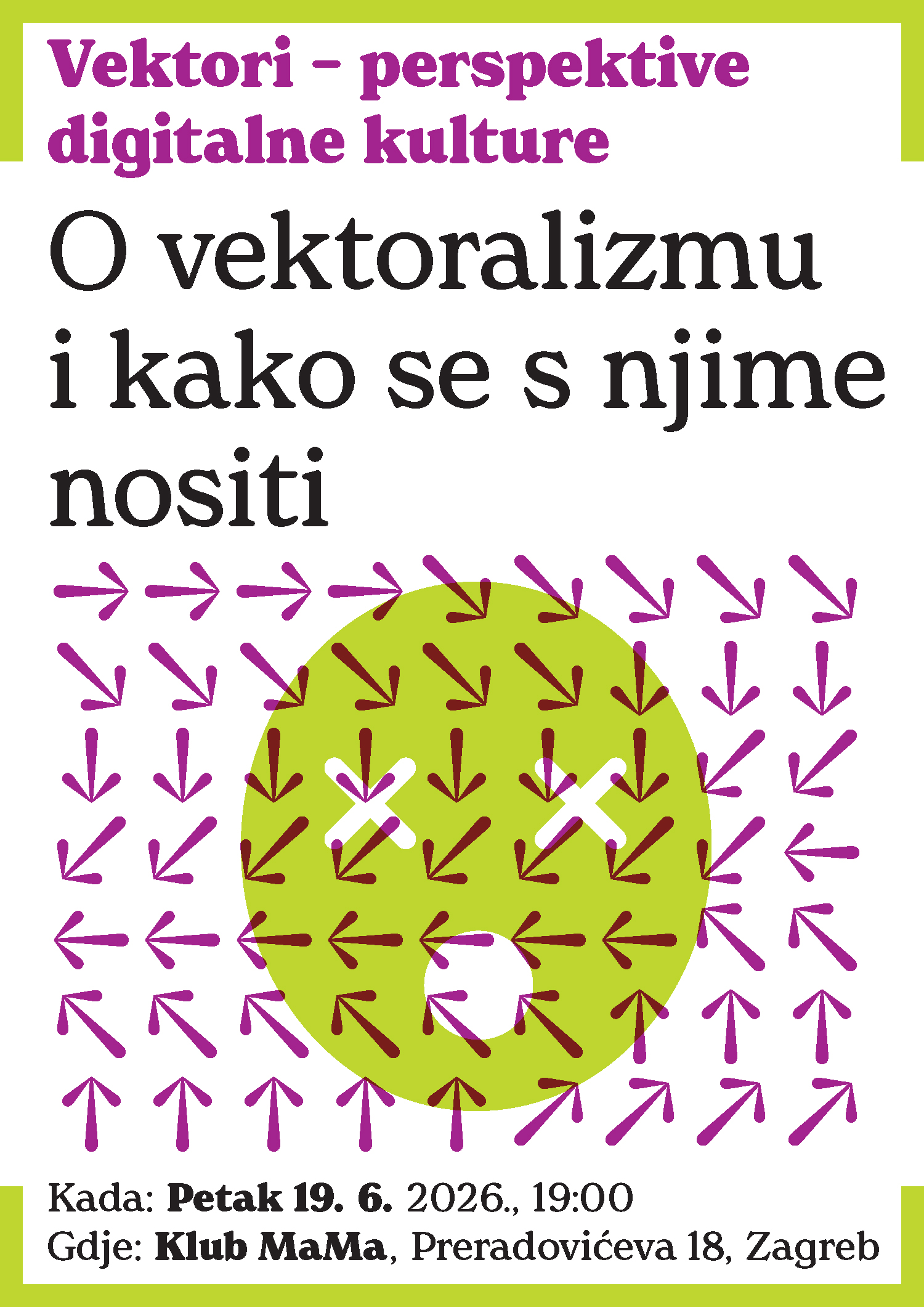
[English below]
2004. godine spisateljica i teoretičarka McKenzie Wark objavljuje Hakerski manifest, revolucionarno djelo koje opisuje ekonomski sustav utemeljen na komodifikaciji informacija te kontroli i vlasništvu nad „vektorima” – sredstvima koji prenose, obrađuju i pohranjuju informacije.
Pojavom generativne umjetne inteligencije i nove industrijske revolucije koju pokreće internet, naša svakodnevica sve više nalikuje svijetu koji Wark opisuje. Neumoljiva komodifikacija i kontrola podataka omogućile su vektoralističkoj klasi da preuzme sve veći nadzor nad aspektima svakodnevnog života, gurajući svijet prema rubu. Ipak, infrastruktura koja sve to pokreće izgrađena je na leđima hakerske klase.
Generativna umjetna inteligencija, urušavanje radničkih prava i nova ekonomija podataka samo su neki od simptoma te transformacije. Jesmo li postali taoci postojećih političkih i ekonomskih sustava moći? Što hakerska klasa može učiniti kako bi u digitalnom dobu ponovno preuzela vlasništvo nad vektorima i sredstvima proizvodnje?
O tim i sličnim pitanjima raspravljat ćemo u programu Vektori – perspektive digitalne kulture, koji započinje kružokom o vektoralizmu, pojmu koji Wark uvodi u Hakerskom manifestu.
Kružok vodi međunarodni tim koji čine (u abecednom redu):
ai carmela netîrk – anarhofeministkinja, lofemme translezbijka, psiborg hakerica, mikorizna migrantica, mediatrix. Spisateljica, povjesničarka, historiografkinja, snimateljica videa, montažerka, voditeljica live streaminga, mikserica slike, sistemska administratorica. Obučena u 15-M okupacijama trgova, Occupy Wall Streetu i Gezi Communeu, nakon vektoralističke globalne kontrarevolucije usmjerila je svoju energiju na separatističke transfeminističke prostore. Trenutačno je dio Systerservera:
Joyce Ng (poznata i kao BitOwl) – inženjerka i hakerica strastvena u namjeri da tehnologiju učini otvorenom i dostupnom svima, sve do samog hardvera. Vjeruje da je otvorena i provjerljiva tehnologija ključna za njezinu demokratizaciju i zaštitu od zlonamjernih aktera. Doprinosi kolektivu UnderGND.Online (izgovara se Underground Online), labavom udruženju hakera i organizatora diljem svijeta koji pomažu opremiti zajednice alatima i okvirima za organiziranje u klimi rastućeg autoritarizma i smanjenja digitalnih sloboda i privatnosti.
Vedran Gligo – samouki DIY haker / umjetnik / organizator / edukator. U svojoj svakodnevnoj praksi snažno primjenjuje principe slobodnog softvera i osnažuje lokalnu zajednicu održavajući besplatne i otvorene digitalne radionice u zagrebačkom hacklabu01 koji je suosnovao 2009. Kroz Format C djeluje u području slobodne kulture, promocije GNU / Linux sustava, glitch stvaralaštva, suradničke online umjetnosti velikog razmjera, nezavisne kulturne produkcije, (h)aktivizma (…). Jedan je od kustosa i osnivača Fubara – bijenala glitch i varijabilne umjetnosti i član Hrvatske udruge interdisciplinarnih umjetnika (HUIU).
Vektori – perspektive digitalne kulture diskurzivni je program posvećen suvremenoj digitalnoj kulturi, tehnologiji i političkoj teoriji kroz javna čitanja, razgovore i kružoke u prostoru MaMe u Zagrebu.
- Event se može pratiti i putem poveznice u nastavku: https://meet.jit.si/VectorsPerspectivesDigitalCulture
****
[English version]
Vectors – Perspectives of Digital Culture – On Vectoralism and How to Deal With It
In 2004, writer and theorist McKenzie Wark published A Hacker Manifesto, a seminal work that describes an economic system based on the commodification of information, and the control and ownership of “vector” – the means by which information is transmitted, processed and stored.
With the dawn of generative AI and the new internet-driven industrial revolution, what is unfolding around us increasingly resembles Wark’s description of the world. The relentless commodification and control of data has allowed the vectoralist class to command growing aspects of everyday life, pushing the world to the brink. Yet, the infrastructure that makes all of that tick is built on the backs of the hacker class.
Generative AI, eroding labor rights, and the emerging data economy are only some of the symptoms of this transformation. Will we become beholden to the current political and economic systems of power? What can the hacker class do to take back ownership of vectors and the means of production in this digital age?
We will explore these questions in Vectors – Perspectives of Digital Culture, a discursive program starting with a study on vectoralism, a concept introduced by Wark in A Hacker Manifesto.
The group talk is led by an international team consisting of (in alphabetical order):
ai carmela netîrk – anarchafeminist lofemme translesbian psyborg hacker migrant mycorrhizal mediatrix. Writer, historian, historiographer, videographer, editor, livestreamer, vision mixer, system administrator. Trained in the square occupations of 15M, Occupy Wall Street and Gezi Commune, after the vectoralist global counterrevolution she focused her energies in separatist transfeminist spaces.
Joyce Ng (also known as BitOwl) is an engineer and hacker who is passionate about making technology open and accessible to all, down to the hardware level. She believes that having technology that is open and verifiable is essential for democratizing technology and protecting against malicious actors.
She contributes to UnderGND.Online (pronounced Underground Online), a loose association of hackers and organizers worldwide helping equip communities with the tools and frameworks to organize in a climate of rising authoritarianism and decreasing digital freedoms and privacy.
Vedran Gligo – a self-taught DIY hacker/artist/organizer/educator. Strongly applying open source principles in everyday life and practice and working to empower the local community by holding free and open digital workshops through the hacklab01.org project which he co-founded in 2009. Working with Format C Art Org, he is active in the fields of free culture, promotion of the GNU/Linux system, glitch art production, large-scale collaborative online art, independent cultural production, (h)activism, and more. He is one of the curators and founders of Fubar – a glitch and variable art biennale and a member of the Croatian Association of Interdisciplinary Artists (HUIU).
Vectors – Perspectives of Digital Culture is a discursive program dedicated to contemporary digital culture, technology, and political theory through public readings, discussions, and study groups hosted at Klub MaMa in Zagreb.
- The event can also be followed via the link below: https://meet.jit.si/VectorsPerspectivesDigitalCulture